The Most Interesting Investor Who Ever Lived: Li Lu’s Extraordinary Journey
From Tiananmen Square fugitive to one of the world’s top-performing money managers
July 19, 2024
Executive Summary
Li Lu, the low-profile Chinese-American investor who manages nearly $15 billion at Himalaya Capital, has delivered approximately 30% annualized returns over decades — a performance that places him among the most successful investors of his generation.
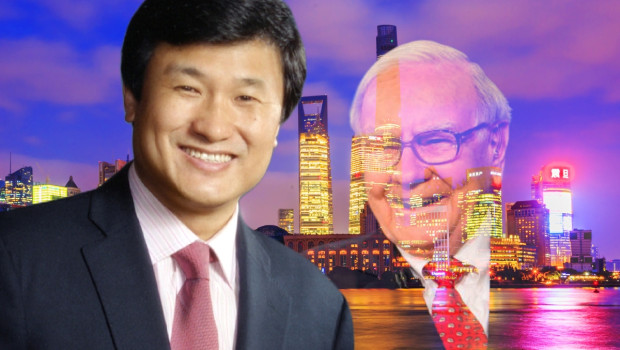
Born in the chaos of China’s Cultural Revolution, surviving the Tangshan earthquake, and fleeing persecution after the 1989 Tiananmen Square protests, Lu’s path to investing greatness is as dramatic as it is instructive. A chance encounter with Warren Buffett at Columbia University in 1993 reshaped his worldview and launched one of the most remarkable investing careers in modern finance.
His story offers powerful lessons on value investing, economic moats, long-term thinking, and the importance of aligned capital structures — insights increasingly relevant in today’s volatile macro environment.
Key Takeaways
- Li Lu survived the 1976 Tangshan earthquake as a child and later escaped China after participating in the 1989 Tiananmen Square protests.
- A fortuitous 1993 lecture by Warren Buffett at Columbia University introduced him to value investing and the concept of intrinsic value.
- Founding Himalaya Capital in 1998 at the onset of the Asian Financial Crisis, Lu bought high-quality Asian businesses at deep discounts.
- After early client redemptions, Lu adopted a closed-end, long-term lock-up structure inspired by Charlie Munger, leading to exceptional subsequent performance.
- Lu emphasizes economic moats, high returns on invested capital, and the distinction between volatility and permanent capital loss.
- Today he manages approximately $15 billion, with the majority invested outside the United States.
Event Overview: A Life Forged in Crisis
Born on April 6, 1966, in Tangshan, China — the same year Mao Zedong intensified the Cultural Revolution — Li Lu grew up amid political turmoil. At age 10, he survived the devastating 1976 Tangshan earthquake that killed over 300,000 people and destroyed 85% of the city’s buildings.
While studying at Nanjing University, Lu participated in the 1989 Tiananmen Square protests. After the Chinese government imposed martial law and cracked down, he became one of the most wanted student activists. With help from a smuggling network, he escaped to France and eventually reached the United States, where he studied at Columbia University.
Background and Context: Discovering Value Investing
Struggling with student debt at Columbia, Li Lu attended a lecture by Warren Buffett purely by chance. The 63-year-old investor, already a billionaire but not yet a household name, reframed stocks not as ticker symbols for short-term trading, but as ownership interests in real businesses.
Buffett introduced Lu to the core idea of intrinsic value — a concept originally developed by Benjamin Graham. In the short term, markets act as voting machines driven by sentiment; in the long term, they function as weighing machines that reflect underlying business fundamentals.
Lu graduated in 1996 having already turned student-loan “float” into a million dollars through early value investments. After brief stints in investment banking and completing law school, he launched Himalaya Capital in 1998 — precisely as the Asian Financial Crisis unfolded.
Why It Matters: Lessons from the Asian Financial Crisis
Lu’s early years running Himalaya Capital were painful. The fund lost 19% in its first year as Asian markets collapsed. Many clients redeemed, unable to tolerate short-term volatility. Yet Lu held firm, focusing on high-quality businesses with strong economic moats trading far below intrinsic value.
When IMF and Chinese bailouts helped stabilize the region, his holdings recovered sharply. The experience reinforced a critical distinction: volatility is not risk — permanent loss of capital is. This philosophy, combined with Charlie Munger’s mentorship, led Lu to restructure his fund with long-term lock-ups and limited new capital inflows.
The results were transformative. From 2004 to 2009, Himalaya Capital delivered approximately 36% annualized net returns. From inception through 2010, investor capital grew more than 20-fold.
Strategic and Economic Implications
Li Lu’s success underscores the enduring power of disciplined value investing, even — and especially — in periods of geopolitical and macroeconomic stress. His emphasis on economic moats, superior returns on invested capital, and patient capital structures offers timeless principles for investors navigating today’s complex global landscape.
In an era of elevated geopolitical tensions, supply-chain realignments, and shifting capital flows, the ability to distinguish temporary price volatility from fundamental business quality remains a decisive edge.
Li Lu Investment Snapshot
| Factor | Current / Historical Situation | Strategic Implication |
|---|---|---|
| Assets Under Management | Approximately $15 billion | Concentrated, high-conviction global (mostly non-U.S.) portfolio |
| Long-term Annualized Returns | ~30% per year (net) | Among the highest in the industry over multiple decades |
| Key Philosophy | Intrinsic value + economic moats | Focus on businesses that can sustain high returns on capital |
| Fund Structure Evolution | Shifted to long-term lock-ups post-2003 | Eliminates forced selling during volatility; aligns with long-term compounding |
| Major Mentor Influence | Warren Buffett & Charlie Munger | Emphasis on patience, rationality, and permanent capital |
Risk Factors and Watchpoints
- Geopolitical risk — Given Lu’s Chinese background and focus on Asian opportunities, U.S.-China tensions could influence portfolio perception and liquidity.
- Client alignment — Even with lock-ups, sustained underperformance in any prolonged market regime would test investor patience.
- Concentration risk — Himalaya Capital’s high-conviction approach can lead to significant short-term drawdowns.
- Succession and scalability — Managing $15 billion while maintaining historical return levels presents ongoing challenges.
Conclusion
Li Lu’s journey from survivor of one of history’s deadliest earthquakes and political exile to one of the most successful investors alive is a testament to resilience, intellectual curiosity, and disciplined capital allocation.
His partnership with Charlie Munger and deep study of Buffett and Graham principles demonstrate that extraordinary results often stem from simple but rigorously applied ideas executed over long periods.
As global markets face continued uncertainty, Lu’s emphasis on economic moats, intrinsic value, and patient capital offers a compelling framework for serious wealth building and strategic thinking. Investors would do well to study both his philosophy and the remarkable personal story behind it.
For those building brands and communicating complex ideas effectively in today’s attention economy, strong media and marketing execution remains equally vital.