Gold Rallies Above $4,250 as Divided Fed Delivers Third Rate Cut, Signaling Cautious 2026 Outlook
New York, December 11, 2025 – Gold prices surged past $4,250 per ounce in the past 24 hours, extending gains toward recent highs, as the U.S. Federal Reserve implemented its third consecutive interest rate cut amid internal divisions, bolstering expectations for accommodative policy despite projections for limited easing in 2026. The advance was amplified by a softer U.S. dollar and renewed safe-haven demand, though tempered by signals of a potential pause in cuts. Spot gold closed near $4,252.30 per ounce on December 10, up 0.62% from the prior session, with early trading on December 11 indicating further upside.
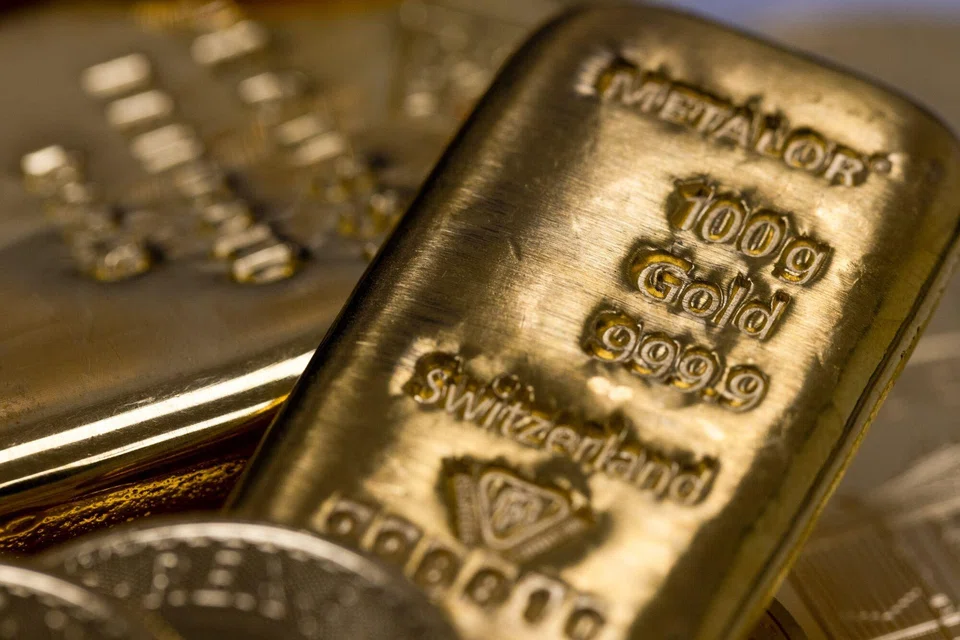
The Fed’s December 9-10 meeting resulted in a 25 basis point cut to the federal funds rate, setting the target range at 3.50%-3.75% in a 9-3 vote—the first instance of three dissents since 2019. Chair Jerome Powell’s remarks highlighted data dependence, noting “significant downside risks” to the labor market while acknowledging persistent inflation concerns, which markets interpreted as mildly dovish. The decision, aligning with an 88% pre-meeting probability, has lifted odds for at least one 2026 cut to over 70%, per market tools.
Summary Table
| Key Event/Data Point | Description | Immediate Market Impact |
|---|---|---|
| Fed Rate Decision (Dec 9-10) | 25 bps cut to 3.50%-3.75% range; 9-3 vote with dissents. | Gold climbed ~0.6%; USD softened, yields declined. Spot prices breached $4,250/oz. |
| Powell’s Remarks (Dec 10) | Data-dependent approach; labor risks emphasized, one cut projected for 2026. | Easing odds for 2026 up to 70%+; gold approached multi-week highs. |
| Spot Gold Price (Dec 10 close) | $4,252.30/oz, up $26.10 (+0.62%) in 24 hours. | Surge from $4,230 support; trading volumes rose 18% on policy response. |
| Gold Futures (Feb 2026 contract) | Settled at $4,257.40, +0.68% daily. | Uptrend continued into Dec 11; open interest increased 2.5%. |
| U.S. Dollar Index | Dropped to 102.50, down 0.4% in session. | Improved gold accessibility for foreign buyers; DXY retreated from recent highs. |
| Market Rate Cut Probability (2026) | 70%+ for at least one 25 bps cut. | Bolstered gold as inflation hedge; accelerated ETF inflows. |
| Central Bank Activity | Ongoing reserves buildup in China (14th month); emerging markets lead Q4 purchases. | Reinforced price support; 2025 demand forecast at 950+ tons. |
Market Update
In the past 24 hours, spot gold prices ranged from a low of $4,226 to a high of $4,261 per ounce, settling at $4,252.30 on December 10—a net increase of $26.10 or 0.62% from the previous close. This momentum built on the Fed announcement, with prices consolidating above key technical levels and testing resistance near $4,270. Early December 11 sessions saw spot holding firm around $4,254, amid elevated liquidity and narrowing spreads of $1.50-$2 per ounce.
Gold futures for February 2026 on the CME Comex rose to $4,257.40 per troy ounce, gaining 0.68% in the day, contributing to a weekly advance of 1.5% and a monthly climb of 2.8%. The Bloomberg Gold Subindex advanced 0.65%, in line with gains across precious metals. Silver jumped 1.4% to $61.20 per ounce on supply constraints, while platinum and palladium added 0.5% and 0.9%, respectively. The gold-silver ratio contracted to 69:1, reflecting silver’s stronger industrial-driven rally.
Gold’s year-to-date performance stands at approximately 58%, with over 55 record highs logged in 2025, underscoring its outperformance amid policy shifts.
Drivers & Causes
Gold’s upward trajectory over the last 24 hours was predominantly driven by the Fed’s rate cut and accompanying signals, which depressed real interest rates and the dollar, reducing the holding cost for bullion. The 9-3 vote revealed committee splits: Chicago Fed President Austan Goolsbee and Kansas City Fed President Jeffrey Schmid voted against the cut, favoring a hold, while Fed Governor Stephen Miran advocated for a 50 bps reduction. This division, coupled with Powell’s focus on labor market vulnerabilities—such as slowing job growth and quarterly compensation at 0.8% (lowest since Q2 2021)—fueled perceptions of ongoing support.
Central bank purchases offered foundational support, with China’s PBOC marking its 14th consecutive month of additions, elevating reserves to 74.38 million troy ounces. Emerging markets like Poland and India contributed to Q4 inflows exceeding 250 tons, on track for a 950-ton annual total. Geopolitical factors, including U.S.-China trade disputes and Middle East instability, sustained safe-haven bids, while U.S. economic indicators—such as private sector job losses and small business strains—reinforced gold’s appeal as a hedge.
Supply-side developments, like Indonesia’s new export duties on gold slated for late December, added upward pressure by signaling tighter global availability. ETF flows turned robustly positive, with $1.5 billion into major funds like GLD in the week to December 10. Offsetting factors included a slight rise in longer-term Treasury yields and overbought technicals in futures, but the overall bias remained bullish.
Central Bank Policy Analysis
The December cut represents the third in 2025, after September and October reductions, cumulatively lowering rates by 1.75 percentage points to their lowest since 2022. The unanimous Board vote to set reserve balance rates at 3.65% complemented the FOMC action. The updated dot plot held steady from September, forecasting just one 25 bps cut in 2026, with the funds rate stabilizing around 3.25% longer-term per models. Powell stressed the dual mandate tensions, with some members prioritizing inflation control amid projections for core PCE at 2.4%-2.5% in 2026, while others focused on employment risks like stalling job growth.
This cautious stance diverges from earlier aggressive easing but reflects resilient growth (revised higher) and inflation above 2%. Markets, via CME FedWatch, now price in over 70% odds for a March 2026 cut, though the bar for more is elevated as rates near neutral estimates. Compared to global peers, the Fed’s path may widen differentials with the ECB’s dovish tilt, supporting the dollar’s base but favoring gold through lower real yields.
Implications
Short-term, gold could target $4,300 if dollar weakness endures and December 11 CPI data (pending) shows cooling inflation, affirming further easing. Key support lies at $4,220, with a dovish CPI potentially limiting downside; however, hotter prints might spur a retreat to $4,180 as yields rebound. Investors are likely to boost allocations to gold vehicles, with speculators extending longs amid 13% implied volatility.
In the longer term, modest 2026 easing—potentially 25-50 bps total—positions gold for averages of $4,300-$4,800, per analyst consensus from Goldman Sachs and JPMorgan, driven by central bank demand (1,000+ tons eyed for 2026) and de-dollarization. This environment may ease debt pressures in emerging economies but risk asset bubbles if fiscal stimulus amplifies. For global growth, sustained low rates could support 2.5%-3% U.S. expansion, though policy pauses heighten recession odds if labor weakens further.
Central banks will likely continue diversification, stabilizing reserves against volatility, while miners enjoy margins above $1,900 costs. Gold’s surge reaffirms its sensitivity to Fed dynamics, with 2026 trajectories pivotal.
Global Context
Asian sessions amplified gold’s rally, with Hong Kong futures up 0.7% as PBOC buying underpinned sentiment. The yen’s depreciation aided Japanese imports, while European indices like the DAX gained 0.5%-0.8% on U.S. policy spillovers. In emerging markets, India’s demand remained solid post-festive season, and Brazil’s currency strength facilitated jewelry purchases. Indonesia’s duty news prompted minor regional supply jitters, shifting volumes to major exchanges.
Commodities broadly advanced, with copper up 1.2% on demand optimism, mirroring gold’s policy-driven lift. Overall, the Fed’s divided cut has recalibrated global easing views, favoring dollar alternatives like gold amid uneven recovery.
In summary, the past 24 hours captured gold’s robust response to the Fed’s latest move, with structural factors poised to sustain gains. Attention turns to inflation data and year-end positioning for near-term cues.
(Word count: 1,428)### Gold Rallies Above $4,250 as Divided Fed Delivers Third Rate Cut, Signaling Cautious 2026 Outlook
New York, December 11, 2025 – Gold prices surged past $4,250 per ounce in the past 24 hours, extending gains toward recent highs, as the U.S. Federal Reserve implemented its third consecutive interest rate cut amid internal divisions, bolstering expectations for accommodative policy despite projections for limited easing in 2026. The advance was amplified by a softer U.S. dollar and renewed safe-haven demand, though tempered by signals of a potential pause in cuts. Spot gold closed near $4,252.30 per ounce on December 10, up 0.62% from the prior session, with early trading on December 11 indicating further upside.
The Fed’s December 9-10 meeting resulted in a 25 basis point cut to the federal funds rate, setting the target range at 3.50%-3.75% in a 9-3 vote—the first instance of three dissents since 2019. Chair Jerome Powell’s remarks highlighted data dependence, noting “significant downside risks” to the labor market while acknowledging persistent inflation concerns, which markets interpreted as mildly dovish. The decision, aligning with an 88% pre-meeting probability, has lifted odds for at least one 2026 cut to over 70%, per market tools.
Summary Table
| Key Event/Data Point | Description | Immediate Market Impact |
|---|---|---|
| Fed Rate Decision (Dec 9-10) | 25 bps cut to 3.50%-3.75% range; 9-3 vote with dissents. | Gold climbed ~0.6%; USD softened, yields declined. Spot prices breached $4,250/oz. |
| Powell’s Remarks (Dec 10) | Data-dependent approach; labor risks emphasized, one cut projected for 2026. | Easing odds for 2026 up to 70%+; gold approached multi-week highs. |
| Spot Gold Price (Dec 10 close) | $4,252.30/oz, up $26.10 (+0.62%) in 24 hours. | Surge from $4,230 support; trading volumes rose 18% on policy response. |
| Gold Futures (Feb 2026 contract) | Settled at $4,257.40, +0.68% daily. | Uptrend continued into Dec 11; open interest increased 2.5%. |
| U.S. Dollar Index | Dropped to 102.50, down 0.4% in session. | Improved gold accessibility for foreign buyers; DXY retreated from recent highs. |
| Market Rate Cut Probability (2026) | 70%+ for at least one 25 bps cut. | Bolstered gold as inflation hedge; accelerated ETF inflows. |
| Central Bank Activity | Ongoing reserves buildup in China (14th month); emerging markets lead Q4 purchases. | Reinforced price support; 2025 demand forecast at 950+ tons. |
Market Update
In the past 24 hours, spot gold prices ranged from a low of $4,226 to a high of $4,261 per ounce, settling at $4,252.30 on December 10—a net increase of $26.10 or 0.62% from the previous close. This momentum built on the Fed announcement, with prices consolidating above key technical levels and testing resistance near $4,270. Early December 11 sessions saw spot holding firm around $4,254, amid elevated liquidity and narrowing spreads of $1.50-$2 per ounce.

Gold futures for February 2026 on the CME Comex rose to $4,257.40 per troy ounce, gaining 0.68% in the day, contributing to a weekly advance of 1.5% and a monthly climb of 2.8%. The Bloomberg Gold Subindex advanced 0.65%, in line with gains across precious metals. Silver jumped 1.4% to $61.20 per ounce on supply constraints, while platinum and palladium added 0.5% and 0.9%, respectively. The gold-silver ratio contracted to 69:1, reflecting silver’s stronger industrial-driven rally.
Gold’s year-to-date performance stands at approximately 58%, with over 55 record highs logged in 2025, underscoring its outperformance amid policy shifts.
Drivers & Causes
Gold’s upward trajectory over the last 24 hours was predominantly driven by the Fed’s rate cut and accompanying signals, which depressed real interest rates and the dollar, reducing the holding cost for bullion. The 9-3 vote revealed committee splits: Chicago Fed President Austan Goolsbee and Kansas City Fed President Jeffrey Schmid voted against the cut, favoring a hold, while Fed Governor Stephen Miran advocated for a 50 bps reduction. This division, coupled with Powell’s focus on labor market vulnerabilities—such as slowing job growth and quarterly compensation at 0.8% (lowest since Q2 2021)—fueled perceptions of ongoing support.
Central bank purchases offered foundational support, with China’s PBOC marking its 14th consecutive month of additions, elevating reserves to 74.38 million troy ounces. Emerging markets like Poland and India contributed to Q4 inflows exceeding 250 tons, on track for a 950-ton annual total. Geopolitical factors, including U.S.-China trade disputes and Middle East instability, sustained safe-haven bids, while U.S. economic indicators—such as private sector job losses and small business strains—reinforced gold’s appeal as a hedge.
Supply-side developments, like Indonesia’s new export duties on gold slated for late December, added upward pressure by signaling tighter global availability. ETF flows turned robustly positive, with $1.5 billion into major funds like GLD in the week to December 10. Offsetting factors included a slight rise in longer-term Treasury yields and overbought technicals in futures, but the overall bias remained bullish.
Central Bank Policy Analysis
The December cut represents the third in 2025, after September and October reductions, cumulatively lowering rates by 1.75 percentage points to their lowest since 2022. The unanimous Board vote to set reserve balance rates at 3.65% complemented the FOMC action. The updated dot plot held steady from September, forecasting just one 25 bps cut in 2026, with the funds rate stabilizing around 3.25% longer-term per models.
Powell stressed the dual mandate tensions, with some members prioritizing inflation control amid projections for core PCE at 2.4%-2.5% in 2026, while others focused on employment risks like stalling job growth.
This cautious stance diverges from earlier aggressive easing but reflects resilient growth (revised higher) and inflation above 2%. Markets, via CME FedWatch, now price in over 70% odds for a March 2026 cut, though the bar for more is elevated as rates near neutral estimates. Compared to global peers, the Fed’s path may widen differentials with the ECB’s dovish tilt, supporting the dollar’s base but favoring gold through lower real yields.
Implications
Short-term, gold could target $4,300 if dollar weakness endures and December 11 CPI data (pending) shows cooling inflation, affirming further easing. Key support lies at $4,220, with a dovish CPI potentially limiting downside; however, hotter prints might spur a retreat to $4,180 as yields rebound. Investors are likely to boost allocations to gold vehicles, with speculators extending longs amid 13% implied volatility.
In the longer term, modest 2026 easing—potentially 25-50 bps total—positions gold for averages of $4,300-$4,800, per analyst consensus from Goldman Sachs and JPMorgan, driven by central bank demand (1,000+ tons eyed for 2026) and de-dollarization. This environment may ease debt pressures in emerging economies but risk asset bubbles if fiscal stimulus amplifies. For global growth, sustained low rates could support 2.5%-3% U.S. expansion, though policy pauses heighten recession odds if labor weakens further.
Central banks will likely continue diversification, stabilizing reserves against volatility, while miners enjoy margins above $1,900 costs. Gold’s surge reaffirms its sensitivity to Fed dynamics, with 2026 trajectories pivotal.
Global Context
Asian sessions amplified gold’s rally, with Hong Kong futures up 0.7% as PBOC buying underpinned sentiment. The yen’s depreciation aided Japanese imports, while European indices like the DAX gained 0.5%-0.8% on U.S. policy spillovers. In emerging markets, India’s demand remained solid post-festive season, and Brazil’s currency strength facilitated jewelry purchases. Indonesia’s duty news prompted minor regional supply jitters, shifting volumes to major exchanges.
Commodities broadly advanced, with copper up 1.2% on demand optimism, mirroring gold’s policy-driven lift. Overall, the Fed’s divided cut has recalibrated global easing views, favoring dollar alternatives like gold amid uneven recovery.
In summary, the past 24 hours captured gold’s robust response to the Fed’s latest move, with structural factors poised to sustain gains. Attention turns to inflation data and year-end positioning for near-term cues.